For Boards
Is your AI structurally governable?
Most boards are told their AI is governed because policies and committees exist. KnowGence shows, with evidence, whether people can still set limits, intervene, roll back and hold someone accountable when AI acts at machine speed.
Why boards are asking
AI now executes decisions faster than traditional oversight can respond. Regulators, auditors and investors increasingly expect boards to show that oversight is real, not just documented. A policy can exist while the control behind it has never been tested.
Four layers, from the boardroom down
Engagements
Five questions to ask management
- Which AI systems can act without a human approving each decision?
- How long does it take us to stop one, and when did we last test it?
- Who, by name, is accountable for each system’s decisions?
- When was each system’s authority last formally re-approved?
- What evidence, not policy, shows our controls work?
If any of these are hard to answer, a Board Briefing is the place to start.
The research behind it
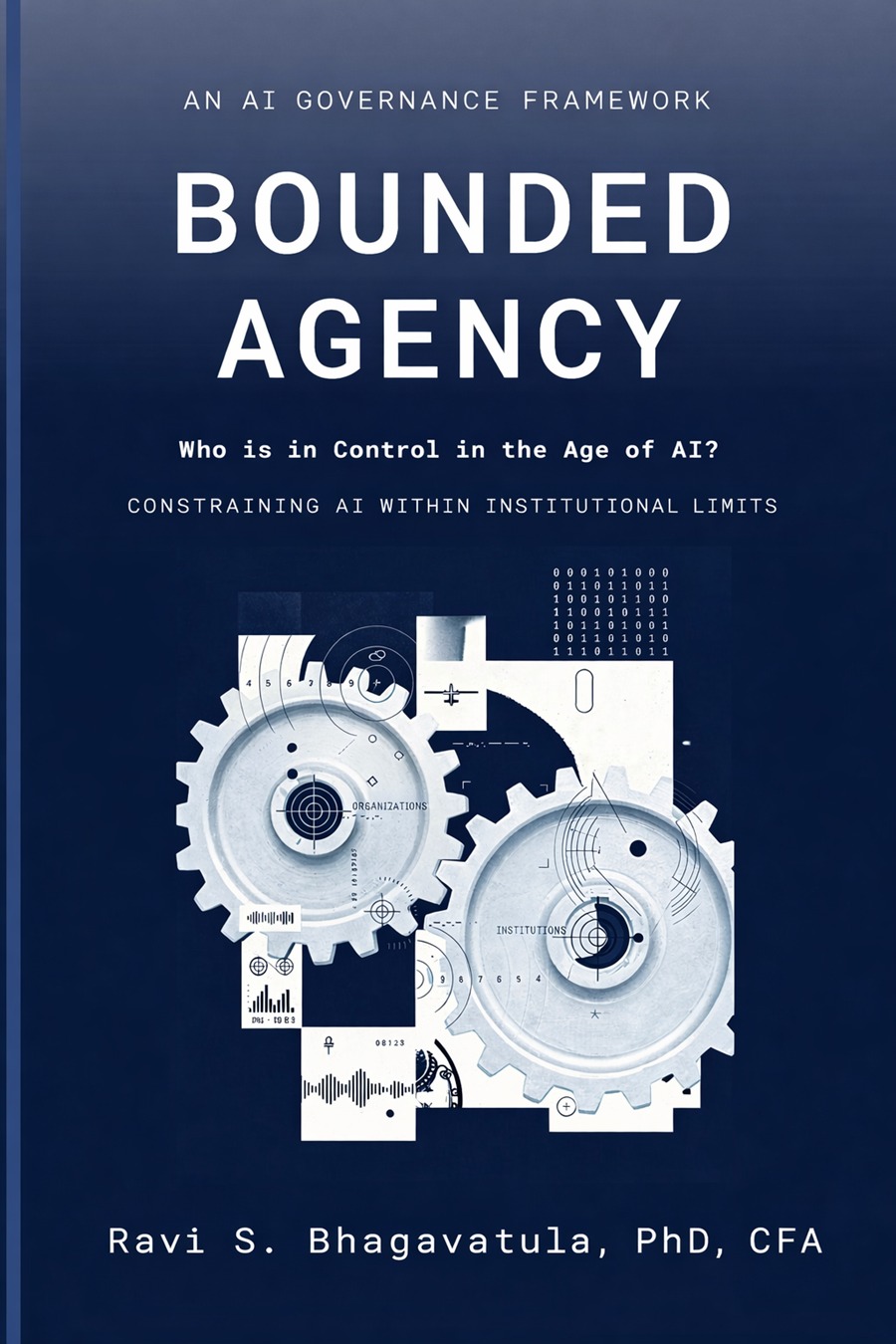
Bounded Agency: Who Is in Control in the Age of AI?
Ravi S. Bhagavatula, PhD, CFA
The research behind every KnowGence assessment: how authority migrates into automated systems, and what boards must do to keep AI in a state of bounded agency, acting within limits people set and can enforce, so that human agency is preserved.
Independent by design
KnowGence sells no technology, ranks no vendors and is paid nothing based on which platform a client chooses. Any platform relationships are disclosed.
Our independence commitments →Two weeks to a clear view of where your organization stands and what the board should examine next.